
The Business Has More Than a Hiring Problem
An open position is a task for HR. A workforce-capacity constraint is a business condition: the company cannot reliably field the people its operating plan requires, so contracts, equipment, and growth wait. The two look similar from a job posting. They are not the same problem—and they do not have the same solution.
Workforce Capacity Is Not Headcount
Workforce capacity is the organization’s ability to acquire and sustain the people required to perform the work—enough people, in the right roles, with the right capabilities, in the right locations, at the right time, who are productive and who remain.
- Available Workforce Capacity
- The people currently employed, properly skilled, productive and retained within the organization.
- Workforce Development Capacity
- The employer’s ability to continually replenish, expand and strengthen that workforce as business conditions change.
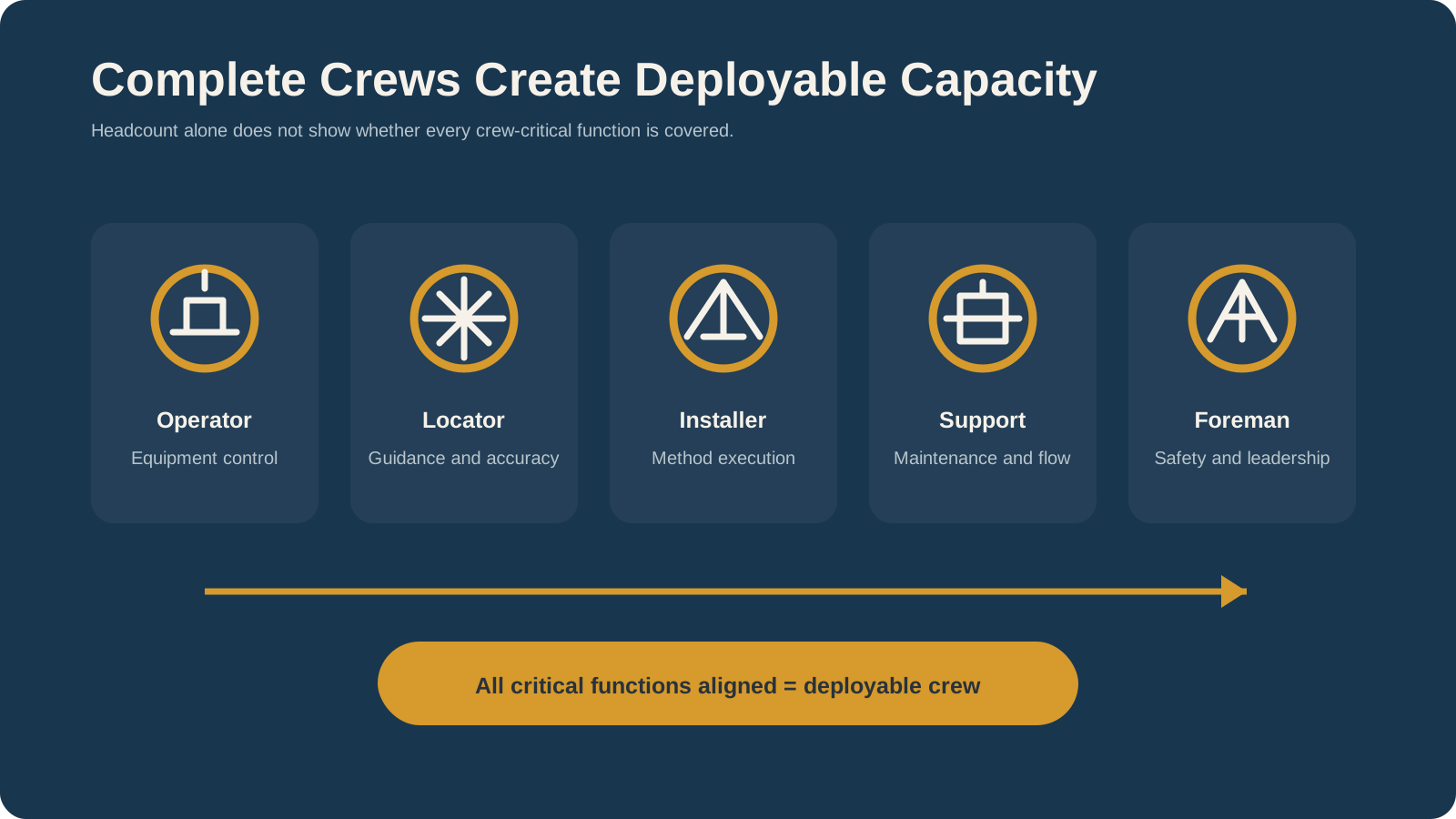
Twenty people on payroll do not necessarily equal two crews. Capacity exists only when every critical function of a crew is covered at the same time.
Workforce Capacity Development
Workforce Capacity Development is the deliberate development of an employer’s ability to continuously attract, identify, engage, select, hire, onboard and retain the workforce required to achieve its operational, financial and growth objectives.
In short: Workforce Capacity Development builds an employer’s ability to consistently produce the workforce it needs to operate and grow. It is not simply the act of filling open positions; it is the creation of an employer-owned capability that can repeatedly produce the human capacity the organization requires.
What trenchless means here: Trenchless is the specialized infrastructure industry that inspects, installs, maintains, rehabilitates, and replaces underground pipelines, utilities, and related systems with minimal surface excavation and disruption. For HireLogiks, the trenchless workforce includes the operators, locators, foremen, installers, technicians, inspectors, mechanics, project leaders, engineers, estimators, safety professionals, and support personnel required to turn specialized equipment and available projects into complete, deployable crews.
Every Operating Priority Runs Through the Workforce
A crew-critical vacancy rarely stays a single empty seat. It can leave equipment idle, delay a project, force costly workarounds, and cap growth. Workforce capacity connects directly to:
- Complete crews
- Productive equipment
- Project execution
- Customer commitments
- Backlog conversion
- Margin capacity
- Expansion
- Succession
- Sustainable growth
How People Become Revenue Capacity
- Qualified WorkforcePeople who meet employer-defined role, safety, experience, and availability requirements.
- Deployable CrewsMethod-specific critical functions covered; shared support and leadership available.
- Productive AssetsReady equipment assigned to productive work instead of waiting on staffing.
- Executable WorkMore planned crew-days move through backlog and schedule.
- Revenue CapacityFinance can estimate the capacity supported under stated assumptions.
Reactive Hiring Sits Inside a Larger System
Recruiting is one conversion function inside the larger employment-market system: it qualifies, presents, advances and closes candidates. Workforce Capacity Development builds the larger capability that feeds and sustains that conversion function. The purpose is not to replace recruiting; it is to give recruiting a system that compounds.
- Starts when a seat is already empty
- Resets to zero after each placement
- Competes mainly on pay
- Begins the conversation after people have chosen
- Starts with the operating priority and the crew map
- Builds assets that carry forward
- Competes on a specific, true employment promise
- Creates preference before the vacancy is urgent
Four Questions That Reveal the Constraint
Different Views of the Same Operating Constraint
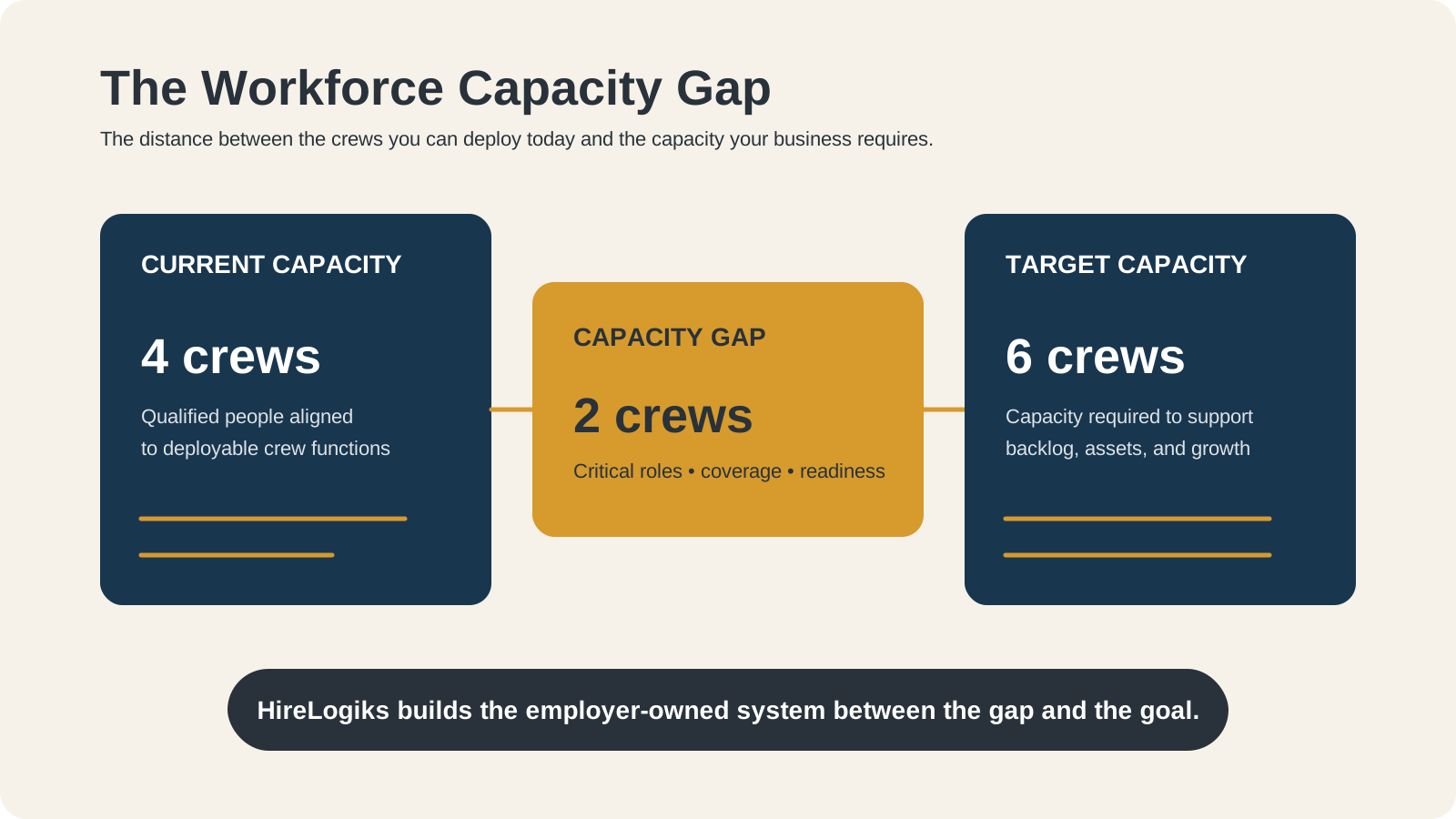
These results answer different leadership questions, and some may overlap. Review each one as a separate planning view rather than combining them into a single total.
See the Calculation LogicThe public formula behind each Snapshot measure
- Current annual capacity
- Current deployable crews × productive crew-days × average revenue per crew-day
- Target annual capacity
- Target deployable crews × productive crew-days × average revenue per crew-day
- Capacity gap
- Target annual capacity − current annual capacity, floored at zero
- Gross-margin capacity
- Capacity gap × employer-entered gross-margin percentage
- Vacancy exposure
- Delayed or unstaffed crew-days × revenue per crew-day × employer-entered impact factor
- Equipment opportunity
- Uncrewed equipment sets × productive crew-days × revenue per crew-day
- Backlog conversion ceiling
- The lower of current backlog and calculated capacity gap
These estimates describe employer-supplied operating capacity. They are not a valuation, revenue forecast, realized margin, guaranteed savings, or promise of hiring results.
What should I understand next?
Understanding the Constraint Is the First Step
The next question is how an employer builds the capability to solve it.